Come and learn this exciting fun solo jazz routine choreographed by the late great Frankie Manning. This stroll is stepped in history and danced all over the globe by Lindy Hoppers. An absolute must for your repetoire!
Our one and only Suze (yes THE Suze Grubham) will be teaching this iconic stroll and the workshop is longer than most – no one wants to be rushed learning The Big Apple. 🙂
You will need to have a good understanding of Jazz steps and at least be confident with the Shim Sham.
Schedule
Sat 30th May
12 – 2.00pm Workshop
2 – 2.30pm Lunch
2.30 – 5.00pm Workshop
About The Big Apple :
The story of the Lindy Hop Big Apple isn’t just history—it’s a burst of rhythm, rebellion, and joy that exploded out of Harlem in the early 20th century. Picture this: it’s the late 1920s and 1930s in Harlem, and the air is electric. Jazz is king, big bands are roaring, and dancers are pushing boundaries every single night. At the legendary Savoy Ballroom, something revolutionary is happening on the dance floor.
Enter the Big Apple.
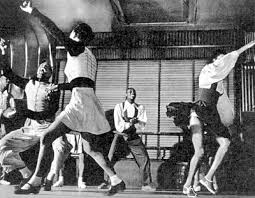
Despite the name, this dance didn’t start in New York—it actually originated in the American South, particularly in African American communities in South Carolina. But when it made its way north to Harlem, it transformed into something bigger, faster, and more spectacular. Dancers formed a circle—called a “ring”—while couples or solo dancers jumped into the center to perform called-out steps. It was part dance, part battle, part performance.
Now mix that with the birth of Lindy Hop—a wild, athletic, improvisational partner dance that embodied the spirit of jazz itself. The Big Apple became one of Lindy Hop’s most iconic routines: a high-energy sequence of synchronized moves, shouted calls, and infectious rhythms.
One of the biggest stars to bring this to life was Frankie Manning, a key choreographer and dancer from the famous troupe Whitey’s Lindy Hoppers. He helped turn the Big Apple into a polished routine that could dazzle audiences on stage and in films—while still keeping its spontaneous, joyful roots. Imagine lines of dancers kicking, spinning, and calling out moves like “Truckin’!” or “Spank the Baby!”—each one with its own flair and attitude. It was playful and expressive.
But the magic of the Lindy Hop Big Apple goes deeper than choreography. It represents a moment when African American culture reshaped the world—through music, movement, and fearless creativity. It’s a symbol of resilience and celebration during a time that wasn’t always easy.
Today, when dancers revive the Big Apple, they’re not just performing steps—they’re stepping into history. Every kick, clap, and call echoes back to those vibrant nights in Harlem, where the music never stopped and the dance floor was a place of freedom.